Why DR2028.org Is Publishing This Special Feature
DR2028.org exists to document every dimension of major international sporting events—from transit infrastructure and governance to the human achievements on the track. While analyzing operational logistics is vital, true transparency requires recognizing when an event breaks cultural and social barriers.
As an organization, we refuse to treat accessibility as an afterthought or a secondary narrative. Christopher Melenciano’s record-breaking performance is not a feel-good sideshow; it is a defining moment in Dominican sports history. By documenting his path from systemic gatekeeping to standing on the podium beside President Luis Abinader, DR2028.org reinforces a fundamental truth: athletic excellence belongs to anyone willing to put in the work, and public institutions must adapt to support that talent rather than block it.
Deaf individuals possess the ability to do absolutely anything except hear. That truth was displayed on a massive scale at the 2026 Central American and Caribbean Games in Santo Domingo. When Christopher Melenciano stepped up to the track and captured gold in the mixed 4×400-meter relay, he destroyed decades of institutional low expectations.
As a deaf individual, watching Christopher stand on that podium hit deep. But the story behind his gold medal reveals the real battle deaf athletes face before they ever step onto a track.
Deaf Dominicans face systematic barriers, exclusion, and institutional neglect. Skilled deaf athletes are rarely seen at the international level not because the talent is missing, but because the infrastructure fails them. Christopher initially wanted to play basketball. When he tried to join sports programs, local deaf organizations stalled his progress, forcing him to wait on the sidelines while his potential sat unused.
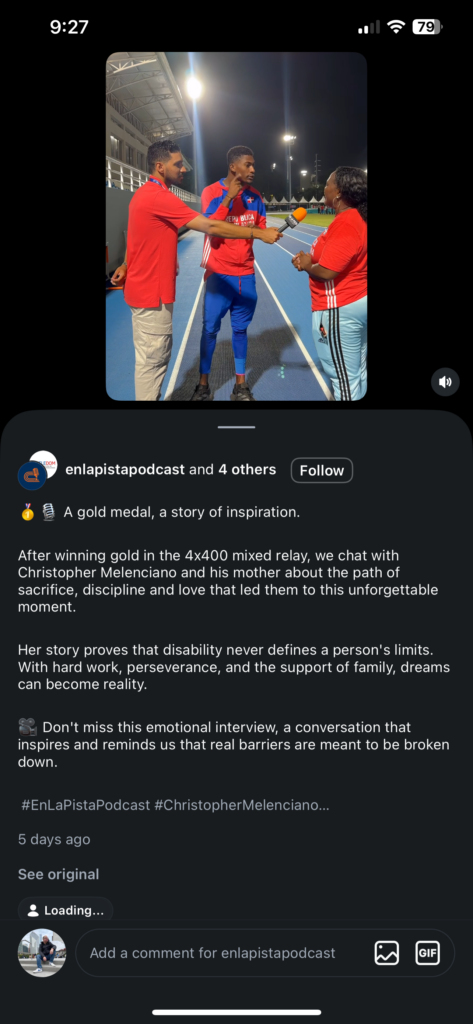
His mother refused to accept that passive outcome. Seeing his drive, she bypassed the bureaucracy and reached out directly to a hearing track organization to get him real coaching. Christopher agreed to switch disciplines, giving track and field a shot. Within months, his natural speed took over. His mother saw what the gatekeepers missed: he was built for world-class competition.
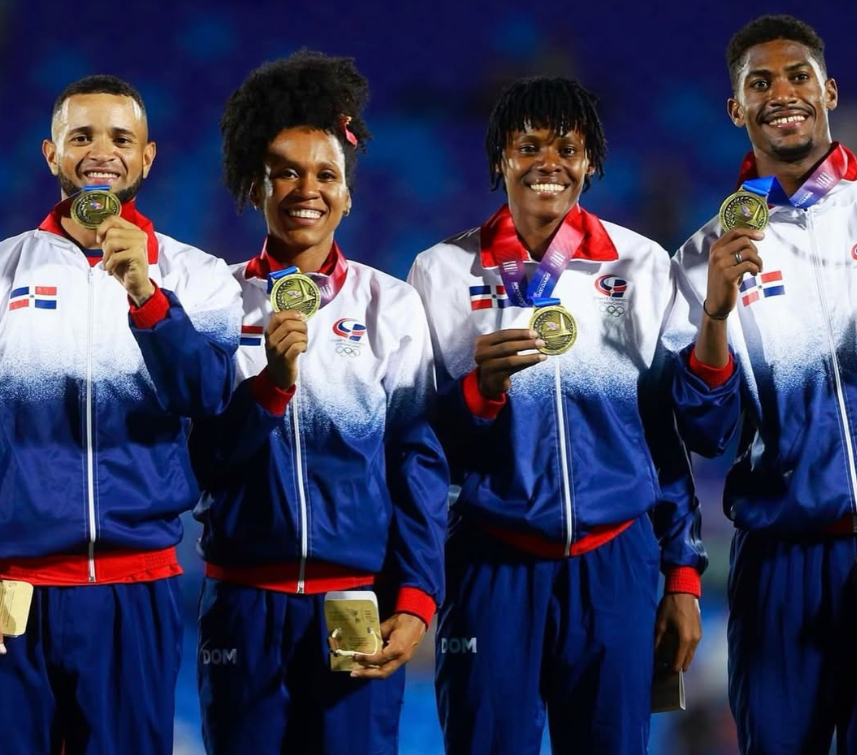
Fast forward to Santo Domingo 2026. Running the mixed 4×400-meter relay alongside teammates Marileidy Paulino, Erick Sánchez, and Anabel Medina, Christopher delivered a performance for the history books. As detailed in coverage by El Caribe, Christopher was a key component in securing the relay victory, proving that a deaf athlete could seamlessly execute transitions and pacing in a high-pressure, elite field. The Dominican squad did not just win gold—they set a new Games record with a time of 3:10.57.
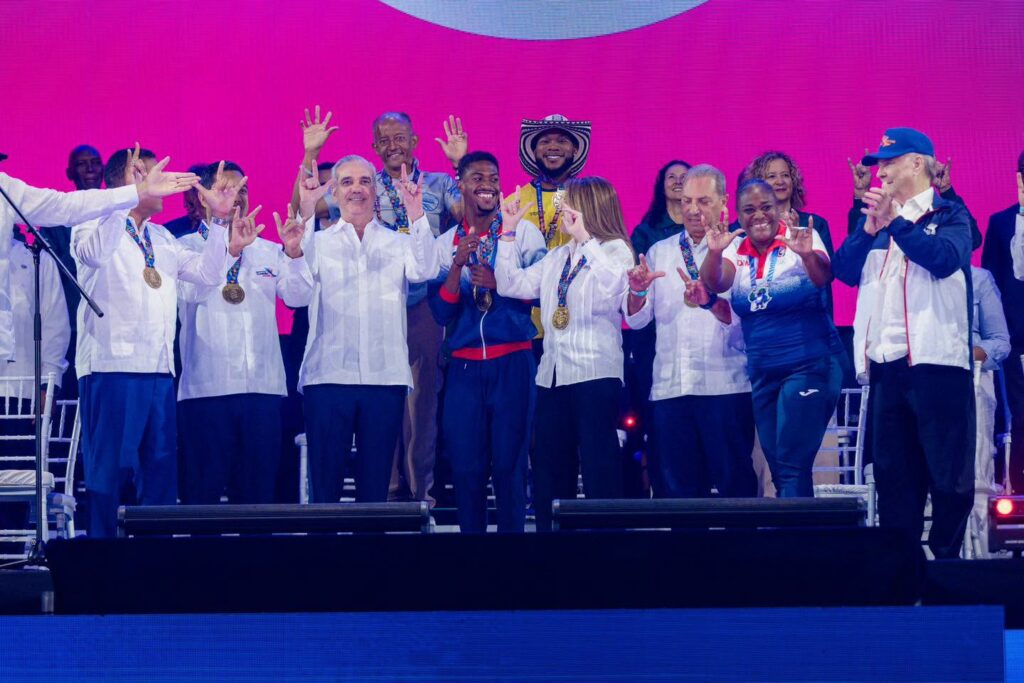
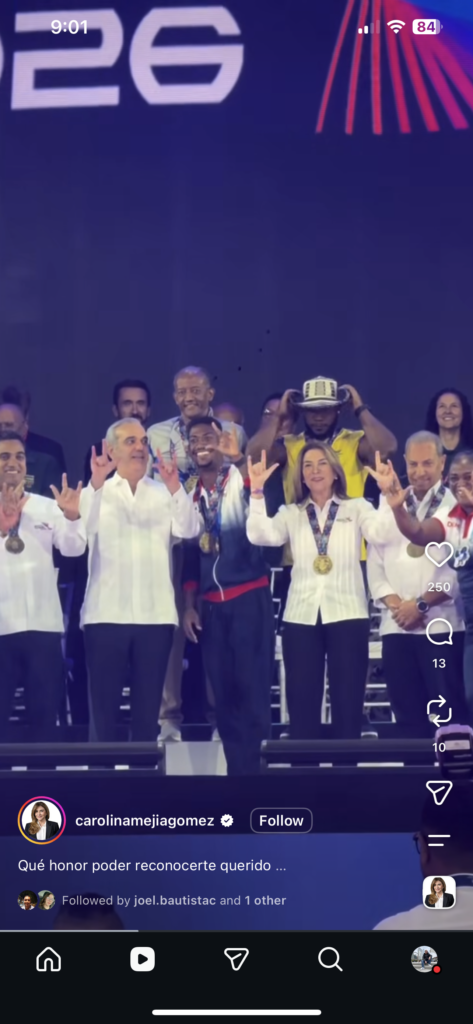
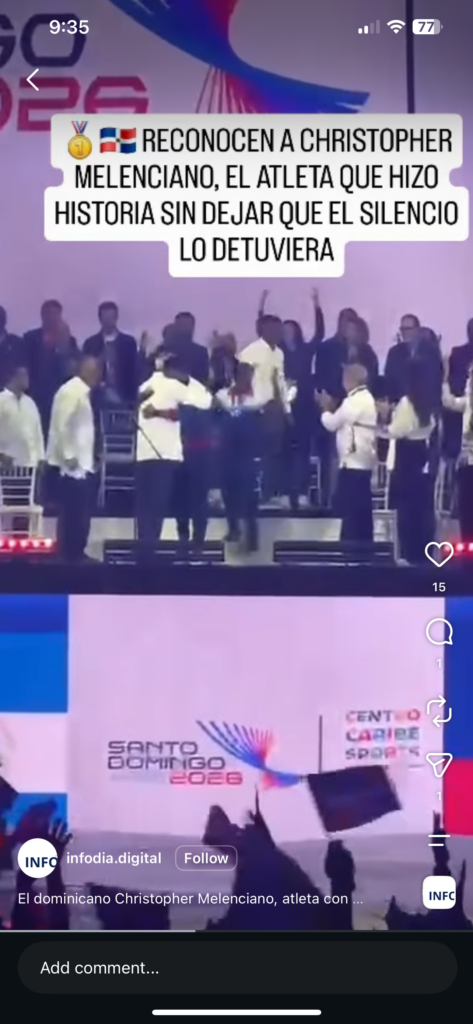
The defining moment came during the closing ceremony at the Virgilio Travieso Soto Arena. Reporting from De Último Minuto verified that Christopher’s own teammates selected him as the single best athlete across the entire Dominican delegation. On stage, President Luis Abinader presented him with a special medal of recognition, while officials and thousands of spectators raised their hands in the “I love you” sign—a recognition of his talent that echoed across the globe.
Christopher’s achievement proves that deafness is not a limitation. To every deaf child in the Dominican Republic and around the world: the sky is the limit. Ignore the gatekeepers who tell you to wait. Demand your spot, put in the work, and let the world catch up to you.