
The Dominican Republic: A Journey of Roots, Resistance, and the Spirit of Freedom

The story of the Dominican Republic is a symphony of courage, culture, and identity, woven through centuries of struggle and triumph. To truly understand the Dominican Republic—La Quisqueya that lives in every Dominican heart—we must go back to the very roots of the land and its people, long before flags waved and borders were drawn.
The Taino Legacy: The First Guardians of the Land
Before Columbus set foot on the island in 1492, the land we now call the Dominican Republic was known as Quisqueya—meaning “mother of all lands”—by the Taíno people, the island’s original inhabitants. They thrived with their own culture, language, and traditions, living off the fertile land, rivers, and sea. Their society was structured yet communal, led by caciques (chiefs) and governed by principles of respect for nature and community life. The Taíno were artists, farmers, fishermen, and visionaries, leaving behind petroglyphs that still whisper their stories to those who listen.
But their way of life changed forever in 1492, when Columbus arrived and claimed the land for Spain, renaming it Hispaniola. The arrival of the Spaniards marked the beginning of colonization, forced labor, and a devastating loss of life for the Taíno due to disease, war, and enslavement. Yet, their legacy lives on—in the words we speak, in the food we eat, in the music we dance to, and in the blood that runs through Dominican veins.
The Struggle for Freedom: From Colony to Republic
For centuries, the land that is now the Dominican Republic became a pawn in the hands of European powers—first Spain, then France, then Spain again. The island’s history was marked by invasions, slavery, and the exploitation of its people. But amid the suffering, seeds of resistance grew strong.
The first sparks of independence were lit in the early 19th century, as revolutionary ideas swept across the Americas. Haitians, under the leadership of Toussaint Louverture and Jean-Jacques Dessalines, overthrew French rule and declared independence in 1804—the first Black republic and the second independent nation in the Americas after the United States. For a brief time, Haiti controlled the entire island, including what is now the Dominican Republic, in an effort to prevent European powers from reestablishing slavery and colonial control.
However, the Dominican people yearned for their own identity and self-rule. They longed for freedom—not just from colonial masters, but from any outside power. This yearning culminated in the founding of the Dominican Republic on February 27, 1844.
It was a night of quiet courage when a small group of visionaries, known as La Trinitaria, led by Juan Pablo Duarte, Ramón Matías Mella, and Francisco del Rosario Sánchez, took a bold stand. They raised the blue, red, and white flag at the Puerta del Conde in Santo Domingo, proclaiming independence from Haitian rule. Mella’s legendary blunderbuss shot into the air that night echoed across the land—it was the sound of a nation being born.
But the road to freedom was not smooth. For decades, the Dominican Republic faced internal divisions, invasions, and foreign occupations. Spain tried to recolonize the country in 1861, leading to the Restoration War (Guerra de la Restauración), where Dominicans, driven by the unyielding spirit of their ancestors, fought fiercely to regain their sovereignty, which they achieved in 1865.
A Century of Independence: The Dominican Republic at 100
Fast forward to 1944—the 100th anniversary of Dominican independence. By then, the Dominican Republic had weathered storms of dictatorship, economic struggles, and foreign intervention. The scars of the past were many, but so were the victories. The centennial celebrations in 1944 were a powerful moment of reflection and pride for the Dominican people.
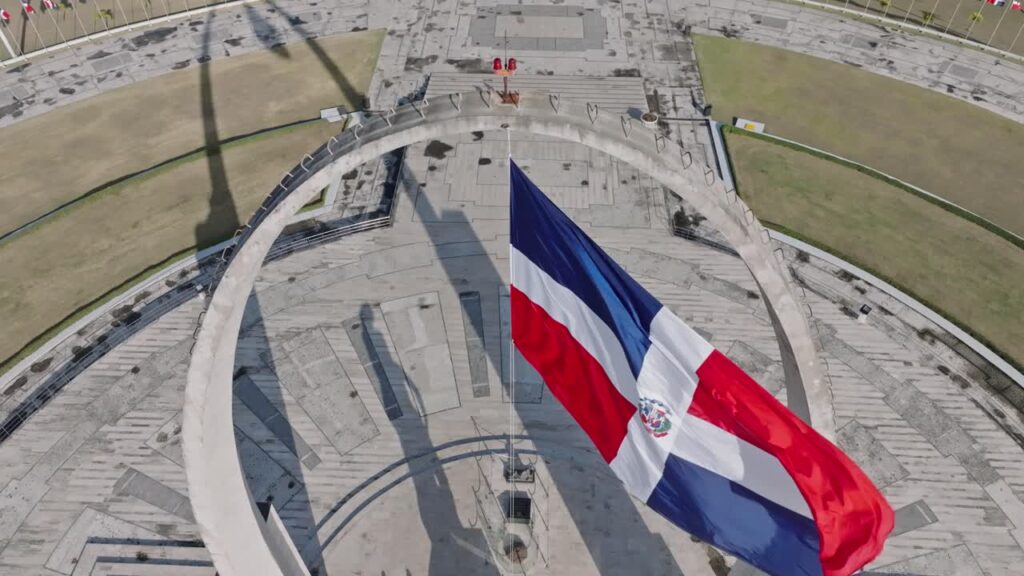
Parades filled the streets of Santo Domingo, flags waved high, and music rang out across the land. It was a time to honor the heroes of 1844 and remember the sacrifices made by generations who fought for the dream of freedom.
But it was also a time to recognize the work still ahead. Trujillo’s dictatorship cast a dark shadow over the nation, reminding everyone that independence is not a finish line but a flame that must be protected. The Dominican Republic’s journey was far from over—but the centennial reminded the world that the spirit of Duarte, Mella, Sánchez, and all who came before lived on in every Dominican heart.
The Dominican Identity: Culture, Pride, and the Future
Today, the Dominican Republic is a tapestry woven with threads of Taino, African, and European heritage. It is a land of vibrant merengue and bachata, of sancocho and mangú, of baseball fields and domino tables, of cafecito and warm conversations in the shade of a mata de mango. It is a country of resilience, of laughter in the face of hardship, of communities coming together, of dreams both big and small.
The Dominican flag—blue for liberty, red for the blood of heroes, and white for salvation—reminds us that independence is a gift paid for by generations past. It also challenges us to keep building a just and equitable nation, where every Dominican child has a chance to thrive, where culture is celebrated, and where the land is respected and protected for generations to come.
A Final Thought: Independence is More Than a Date
As we look back on the founding of the Dominican Republic and the 100 years that followed, we see a story not of perfection, but of persistence. The Dominican Republic is a testament to what happens when a people refuse to be silenced—when they fight for the right to define themselves, their land, and their future.
Independence is more than a date on the calendar. It is the heartbeat of a nation. It is the story of a people who stood tall against all odds and said, “This is our land. This is our home. And we will make it beautiful.”
So let us honor the past, celebrate the present, and build a future where the spirit of La Trinitaria lives on in every act of courage, in every dream for justice, and in every heartbeat that calls the Dominican Republic home.
¡Que viva la República Dominicana, ayer, hoy y siempre!