The World Health Assembly and Why DR2028 Exists
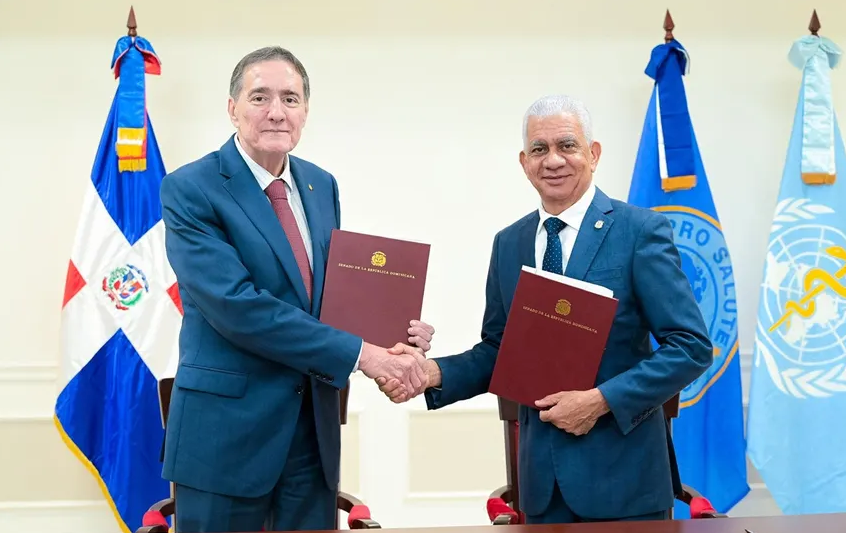
The Dominican Republic just became the first country in our history to lead the World Health Assembly, the highest decision-making body of the World Health Organization. President Abinader announced it during his accountability address. The countries of the Americas unanimously proposed us. This is not small.
The Ministry of Public Health earned this position through sustained technical and institutional reforms. Disciplined planning. Scientific rigor. Human commitment. These are not words you hear often when people talk about Dominican government. But this is exactly what happened. A ministry saw a problem, built the infrastructure to fix it, and became a regional reference point. The world noticed.
Here is what makes this recognition matter for Dominican Republic's future: it proves something we need to understand about our own country.
We can do this. We have the capacity. We have people willing to work with discipline and scientific rigor. The Ministry of Public Health demonstrated it. When a government sector commits to institutional reform and sustained technical improvement, it works. Other countries recognize it. International organizations trust it. Your own population sees it happening and believes in it.
So now the question becomes unavoidable: why is this not happening everywhere?
Why does the Ministry of Public Health have the discipline and rigor to lead global health institutions, but the Ministry of Housing is still approving construction codes that collapse roofs? Why can one sector embrace sustained institutional reform while others operate like they did twenty years ago? Why is scientific rigor the standard at the global health table but not the standard for building safety, labor protections, disability services, or environmental governance?
This is not a criticism of Public Health. This is an argument for replication.
The World Health Assembly leadership is a trophy. But trophies are only valuable if they teach you something about how to win. And what the World Health Assembly teaches us is this: when a Dominican government sector commits to institutional excellence, it reaches institutional excellence. When it prioritizes technical competence and scientific standards, other countries trust it with global responsibility. When it builds systems instead of managing crises, it becomes a regional leader.
DR2028 exists because Dominican Republic needs to ask itself whether leading the World Health Assembly is an exception or a preview.
Is this level of governance excellence reserved for one ministry while others operate on the assumption that things will never change? Or is this the standard we are building toward, sector by sector, ministry by ministry, decree by decree?
The answer to that question will define what happens in 2028 and after. Because you cannot ask your population to trust a government that is simultaneously capable of global health leadership and incapable of basic building safety. You cannot position your country as a regional governance reference while permitting structural failures in housing, labor law, disability access, and public accountability. The credibility does not work that way. It multiplies or it erodes. It scales or it contradicts itself.
The World Health Assembly gave us the platform. Now we have to decide what we are actually saying.
Are we saying: this country has world-class institutional capacity, and we are bringing it everywhere?
Or are we saying: this country has world-class institutional capacity in one ministry, and everywhere else operates like it always has?
Those are the only two options. The middle ground does not exist in governance credibility. Your population knows the difference.
President Abinader described the World Health Assembly nomination as a milestone resulting from technical and institutional reforms. He was right. It is also a mirror. Because if one ministry can do this, the question DR2028 must answer is simple: what is preventing every ministry from doing this?
The answer is not capacity. The Ministry of Public Health proved we have that.
The answer is not will. The Ministry of Public Health proved we have that too.
The answer is structural. It is systemic. It is about what gets prioritized, who gets held accountable, and whether a government is willing to build institutions or just manage them.
That is what DR2028 is for. Not to criticize what is working. But to ask why only one sector is allowed to work this way, and to propose the decrees that would make this standard, not exception.
The World Health Assembly is watching. The region is watching. Your own country is watching.
Now they want to see if Dominican Republic is serious about governance. Not just in one ministry. Everywhere.