Infrastructure Collapse, Round Two: The February Blackout Exposes Dominican Grid Design as Fundamentally Broken
February 2026
Introduction
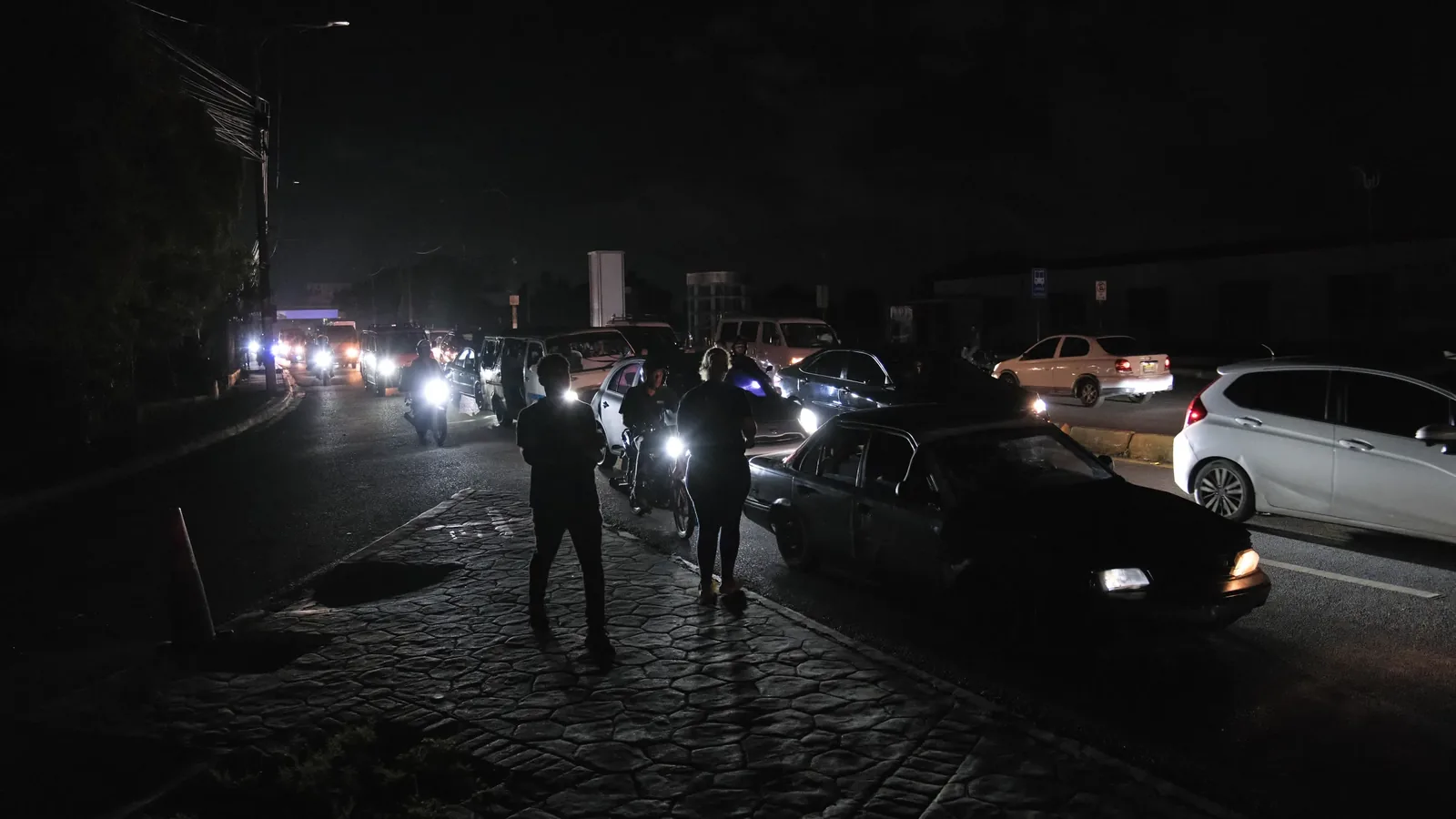
On February 23, 2026, the Dominican Republic went dark again. A nationwide blackout hit the country for the second time in less than three months. This time it lasted hours. Traffic gridlocked. Public transportation stopped. Hospitals and water systems relied on backup power. Businesses shut down.
The cause: a transmission line switch failure that tripped the system into protection mode, causing main power plants to shut down without warning and cascading into a total grid collapse.
In November, we documented how human error during maintenance at two major plants brought down the entire system. That blackout lasted five hours and was blamed on operator mistake.
Three months passed. No major grid reforms were announced. No significant infrastructure investments were disclosed. No independent investigation of systemic vulnerabilities was published.
Then February happened. And this time, it wasn't human error. It was a design problem. A single transmission line switch failure shouldn't bring down a nation. The fact that it does reveals something fundamental: the Dominican electrical grid isn't just fragile. It's fundamentally broken. And the government has shown no serious commitment to fixing it.
Connecting November to February: Three months, no reform
In November, we asked hard questions about infrastructure governance. How does one maintenance mistake cause a nationwide collapse? The answer revealed poor design, inadequate redundancy, insufficient automation, and chronic underfunding.
Then we laid out what needs to change: grid modernization, independent oversight, backup systems for critical infrastructure, real-time monitoring, workforce training, and serious investment.
Three months later, here's what happened: nothing visible. No announced grid modernization plan. No new funding committed. No independent investigation published. No regulatory reforms. No workforce training initiatives. No separation of operations from politics.
Just a government that went quiet on the issue and hoped people would move on to other concerns.
Then February delivered the message: you can't ignore infrastructure failure and expect it to stay away.
What happened on February 23: The cascade failure explained
Here's the timeline and mechanics of the February 23rd blackout:
At approximately 10:50 a.m., a failure occurred on a transmission line switch in the National Interconnected Electric System (SENI).
That single switch failure tripped the system into protection mode.
When the switch failed, main power plants abruptly shut down without warning. Not gradually. Not in controlled fashion. Abruptly.
That sudden shutdown of main plants caused all other generating units in the country to shut down automatically in a cascade effect.
By mid-morning, the entire Dominican electrical system was offline.
Power was restored to approximately 30% of capacity by mid-afternoon, but full restoration took longer.
Energy Minister Joel Santos stated that the blackout was caused by a failure on a transmission line switch and invoked "established protocols" for restoration.
Here's the critical part: one switch failure shouldn't take down an entire country's power system. That's not bad luck. That's bad engineering.
The design problem exposed
The November blackout was blamed on human error. You could argue: train better, improve procedures, avoid the next mistake.
The February blackout reveals the real problem: the grid is designed to fail catastrophically when anything goes wrong.
A well-designed electrical system has mechanisms to contain failures. These include:
Sectional isolation. If something fails in one region, you can isolate that region without affecting others. The Dominican grid doesn't do this effectively. A failure anywhere can cascade everywhere.
Redundancy and parallel pathways. Power can flow through multiple routes. If one path fails, power reroutes automatically. The Dominican grid has insufficient redundancy.
Automatic protection and load-shedding. When something goes wrong, the system should automatically shed non-essential loads to protect essential ones. The Dominican system instead cascades into total shutdown.
Distributed generation. Multiple smaller power sources spread across the country. No single location controls everything. The Dominican system is centralized and dependent on a few major plants.
Real-time monitoring and automated response. Problems detected instantly. Automatic systems respond before humans have to. The Dominican system reacts slowly and manually.
The Dominican grid has none of these mechanisms adequately implemented. It's designed like a system from the 1980s, not a modern grid.
And nobody is surprised. Because everyone knew in November that the grid was vulnerable. Three months later, that vulnerability remains.
Why February is worse than November
November you could excuse: operators made a mistake, people responded, lessons learned. It's painful but understandable.
February you can't excuse. Because February revealed the government doesn't take the problem seriously.
Between November and February, the Ministry of Energy had three months to:
Commission an independent technical assessment of grid vulnerabilities.
Announce a grid modernization plan with funding.
Begin emergency fixes to eliminate single points of failure.
Improve automation and protection systems.
Establish independent regulatory oversight.
Create transparency and public reporting on grid status and maintenance.
Announce workforce training initiatives.
Coordinate with international technical experts.
They did none of this visibly. They went quiet.
Then the grid failed again, proving the vulnerabilities were still there.
That's not institutional learning. That's institutional negligence.
The governance failure underneath the technical failure
The repeated blackouts reveal three governance problems:
Chronic underfunding of critical infrastructure. The Dominican government doesn't allocate sufficient resources to the electricity sector. Maintenance is deferred. Equipment ages. Upgrades don't happen. You can't run a modern grid on a budget designed for 1990.
Political interference in operations. The electricity sector is subject to political pressure. Officials protect jobs and contracts. Operational decisions get made for political reasons. That prevents rational, long-term planning.
Absence of independent oversight. There's no independent technical authority making sure the grid is safe and well-managed. No regulator with teeth. No public agency that's accountable if the system fails.
These three problems created the fragility. And the government's response to February (which is silence) shows it's not serious about fixing them.
The economic and social cost
A nationwide blackout isn't just an inconvenience. It has real costs:
Lost business productivity. Factories stop. Stores close. Services halt. That's lost revenue and lost output.
Damage to equipment and inventory. Sudden power shutdowns damage electronics, spoil refrigerated goods, interrupt manufacturing processes. That's real loss.
Medical emergencies. Hospital backup power buys time, but it's limited. People on life support, in surgery, depending on dialysis all face risk.
Water system disruption. Pumps stop. Water pressure drops. Contamination risk increases. Vulnerable populations (young children, elderly) face health risks from contaminated water.
Telecommunications disruption. Cell towers down. Internet down. People can't communicate. Emergency services struggle to coordinate.
Psychological impact. People in the dark, unsure when power returns, unable to communicate, stressed about impacts. That's real suffering.
Erosion of confidence. When the government can't keep the lights on, people lose confidence in institutions. They start thinking: if power fails repeatedly, what else isn't working?
And February, coming three months after November with no visible reform, sends a message: the government isn't solving this.
What should have happened between November and February
If the government was serious about infrastructure governance, here's what would have occurred:
Week 1 after November blackout: Independent technical assessment commissioned. International experts engaged. Scope of problems assessed.
Week 2-3: Initial findings reviewed. Emergency measures identified. Temporary protections implemented on most critical vulnerabilities.
Week 4-6: Detailed modernization plan developed. Funding mechanisms explored. Stakeholder consultation begun.
Month 2: Detailed plan published. Funding announced. Timeline established. Regulatory reforms initiated.
Month 3: Implementation begun. Contracts for equipment and services. Workforce training started. Public dashboard launched showing grid status in real time.
Instead, three months passed with silence. No plan. No funding. No transparency. Nothing.
Then February proved nothing had changed.
What needs to happen now: After the second failure, excuses are exhausted
The government can no longer claim surprise or promise to do better next time. There can't be a "third time." Here's what must happen immediately:
Emergency grid stabilization plan. Within two weeks, announce specific technical measures to prevent cascade failures. Name them. Publish timeline for implementation.
Serious funding commitment. Announce actual money. Budget allocation. Foreign loans if necessary. The grid modernization isn't optional. It has to happen.
Independent technical oversight. Create an independent grid regulator with authority to conduct investigations, set standards, and enforce compliance. Not a political appointee. A technical expert with multi-year mandate.
International technical partnership. Bring in experts from countries with stable grids. Costa Rica, Chile, Uruguay. Learn from them. Adopt their approaches.
Public transparency on grid status. Publish real-time data on grid conditions, outages, restoration. Citizens should be able to see what's happening to their power system.
Workforce assessment and investment. Evaluate grid operations workforce. Are they trained? Paid adequately? Equipped? Make whatever changes are necessary. Good people doing their jobs well prevent failures.
Backup power requirements for critical services. Make it mandatory for hospitals, water treatment, emergency services, telecommunications to have backup power rated for 24+ hour outages.
Distributed generation targets. Set goals for solar, wind, small hydro, and battery storage. Reduce dependence on centralized plants.
Accountability mechanism. If another nationwide blackout occurs, specify consequences for government officials responsible for grid operations and oversight. Real consequences.
Community briefings. Hold public meetings explaining what happened, what's being fixed, and when. No hidden reports. Public accountability.
What citizens and civil society should demand
You don't need to be an engineer to hold the government accountable on this. Here's what's non-negotiable:
Timeline and milestones. Don't accept vague promises. Demand specific dates by which grid vulnerabilities will be fixed.
Independent investigation. An independent body (not just the Ministry) should investigate both blackouts and publish findings. The public has a right to know what happened.
Budget allocation. The electricity sector needs real money. That means either higher rates, government spending, or both. Demand transparency on where the money is coming from.
Backup power requirements. Every hospital, water treatment facility, and emergency service should have backup power. Make this mandatory and inspected.
Worker protections. Grid workers should be trained, paid well, and protected from political interference. Their competence matters.
Public dashboard. Real-time grid data should be publicly available. What's the status now? Which regions are affected? When will power be restored? That information should be public instantly.
International expertise. Don't rely only on Dominican expertise. Bring in outside experts. Learn from successful countries.
Consequences for failure. If grid failures continue, there should be accountability. Officials overseeing grid operations should face removal if the system continues failing.
Potential objections and responses
Some will argue:
"Grid modernization is too expensive." — It costs money. But repeated blackouts cost more. A functioning grid is a prerequisite for economic growth. You can't attract investment on an unreliable grid.
"We can't do this overnight." — True. But you can start immediately. Emergency measures now, medium-term modernization, long-term improvements. Doing nothing is unacceptable.
"Other Caribbean countries have blackouts too." — They do. That's not an excuse. Use it as motivation.
"The problem is too complex for quick fixes." — Complexity is real. But some fixes are simple. Eliminate single points of failure. Install backup systems. Improve automation. These can happen relatively quickly.
"We need foreign investment for this." — Maybe. But the government has to be serious first. Foreign investors won't commit to a broken system.
Conclusion
February 23, 2026 was a wake-up call. The first one, in November, could be excused as a warning. The government had three months to heed it.
Instead, the government did nothing visible. No announced reforms. No funding. No transparency. Just silence and hope that the problem would go away.
Then the grid failed again, proving the problems remain.
This isn't acceptable. A functioning electrical grid is foundational. You can't have a modern economy without it. You can't have public health without it. You can't have public security without it. You can't have social stability without it.
When infrastructure fails repeatedly and the government shows no serious commitment to fixing it, that's a governance crisis. It signals that institutions aren't functioning, that political will is absent, that long-term planning is impossible.
The February blackout didn't just cost money and disrupt lives. It exposed something deeper: the government doesn't actually have the capacity or commitment to solve critical problems.
Demand better. Don't accept silence. Don't accept promises without timelines. Don't accept Band-Aids on a broken system.
A functioning grid isn't luxury. It's the foundation everything else depends on. Until the government treats it that way, these blackouts will keep happening.
And each time they happen, they'll prove that governance in the Dominican Republic remains broken.