
Introduction
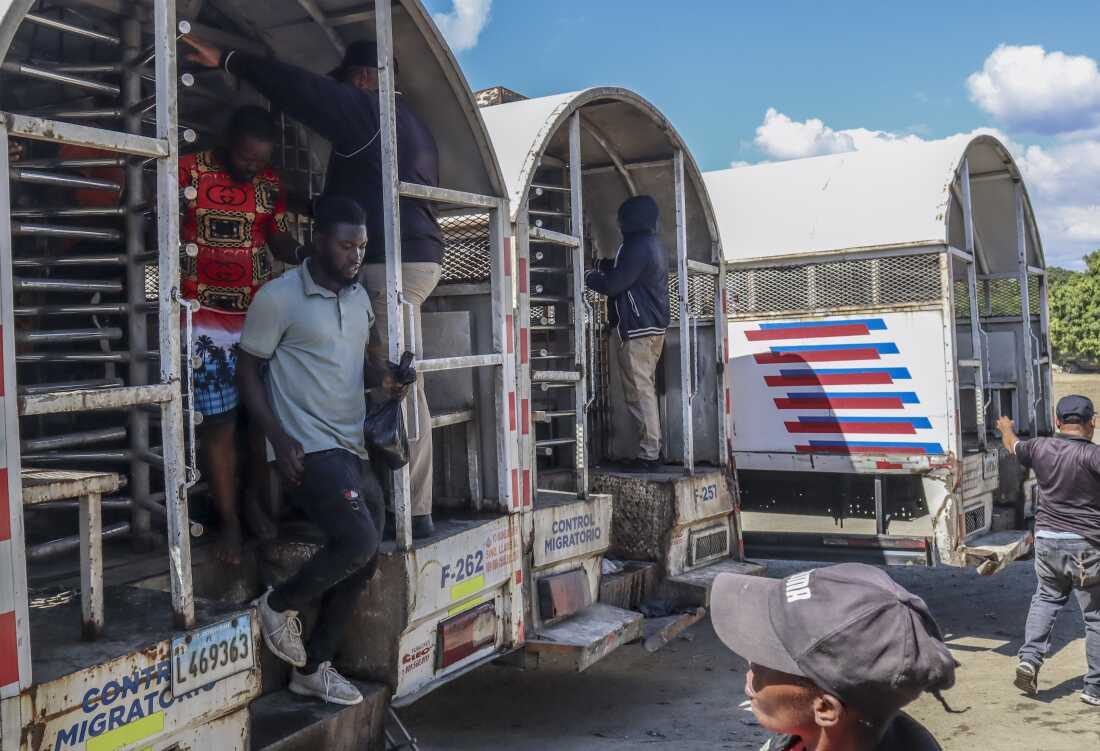
In early October 2025, President Luis Abinader announced an intensified migration enforcement campaign targeting the deportation of approximately 10,000 Haitian migrants per week from Dominican territory. This isn't a quiet adjustment to enforcement. It's a stated, public policy goal with massive operational and human implications.
On the surface, it's a security and resource issue. Haiti is in crisis. The Dominican Republic shares a border. Migration flows are real. But the real question for governance reform is this: Does the Dominican Republic have the institutional capacity, oversight mechanisms, and legal safeguards to execute a mass deportation operation at this scale without abuse, corruption, or institutional decay?
The answer matters more than whether you agree with the policy itself. Because how a government enforces its laws says everything about whether institutions work or whether they're just extensions of political power.
What's actually happening: The numbers and the operation
Here's what we know:
In October 2025, the Abinader administration announced a target of deporting up to 10,000 Haitian migrants per week from the Dominican Republic.
This followed months of tighter border controls and the completion of a $120 million border wall construction project.
The stated rationale: Haiti's security and political collapse is creating a humanitarian disaster, gang violence is rising, and migration flows are destabilizing.
The operational reality: This means coordinating with immigration police, border authorities, detention facilities, transportation, judicial processes, and coordination with Haiti to receive deportees. At scale. Weekly.
In practical terms, that's roughly 520,000 people per year. For context, the Dominican Republic's total population is about 11 million. This isn't marginal enforcement. It's a massive institutional operation.
Why this matters for governance
Speed and scale don't equal legitimacy. And legitimacy doesn't come from having a good reason for a policy. It comes from how you execute it.
When a government announces a mass operation targeting a vulnerable population, several things need to be true:
There must be clear legal authority and processes that constrain official power.
Institutions doing the enforcement must have capacity, training, and accountability mechanisms.
There must be independent oversight to verify that people are actually being deported legally, that rights are being respected, that corruption isn't creeping in.
There must be transparency so citizens and the international community can see what's happening.
None of these are negotiable, regardless of whether the underlying policy is necessary.
The red flags
Looking at what's been reported and what we know about Dominican institutional capacity, here are the things that warrant serious scrutiny:
Detention capacity and conditions. Deporting 10,000 people per week means holding them somewhere first. Does the Dominican Republic have detention facilities designed to handle that volume? What are the conditions? Who's monitoring them? Overcrowded detention centers are incubators for abuse, disease, and human trafficking.
Due process and legal review. Are people actually being processed through legal channels? Or is there a fast-track system where immigration officials just move people through without proper documentation, hearing, or review? If a Dominican citizen is misidentified as Haitian, or if someone has legitimate legal status, how do they contest it? What's the appeal process?
Corruption and abuse. Large-scale enforcement operations attract corruption. Officials demanding bribes to not deport someone. Guards abusing detainees. Collusion with traffickers. Border authorities working with criminal networks. Without independent oversight and investigations, these abuses stay hidden.
Targeting and discrimination. Migration enforcement can become a cover for discrimination against Dominicans of Haitian descent, or for harassing people based on appearance, language, or neighborhood. Are there safeguards against profiling? How are complaints investigated?
Data and transparency. How many people are actually being deported each week? Are they documented? Where are they coming from? What are their circumstances? Are families being separated? Are minors being deported? The Dominican government hasn't published transparent weekly data on these operations.
International human rights standards. The U.N., OAS, and other bodies have guidance on how deportations should be conducted, especially for vulnerable populations. Is the Dominican Republic following those standards, or is it treating mass deportation as a purely domestic issue?
Coordination with Haiti. Haiti is a collapsed state. It has no functioning government in parts of the country. It can't necessarily receive and process 10,000 people per week. What happens to deportees once they arrive? Are they being dumped in gang-controlled areas? Is the Dominican Republic coordinating with any Haitian authorities, or just moving people across the border?
What we've actually seen
In October 2025, civil society groups reported harassment and detention of people assisting migrants. The Sociocultural Movement for Humanitarian and Environmental Work (MOSCTHA) had its headquarters surrounded by anti-Haitian protesters, with no police protection. The coordinator of the Reconocido Movement, a human rights group led mostly by Dominicans of Haitian descent, was arbitrarily detained by national police for hours.
This pattern is important. When enforcement gets aggressive, civil society groups that monitor it or provide assistance get targeted. That's not a coincidence. It's a sign that accountability mechanisms are weakening.
The governance problem at the core
Mass deportation isn't inherently wrong. Countries have borders. But the way a government conducts enforcement reveals everything about the strength of its institutions.
Weak institutions with strong enforcement = abuse, corruption, institutional decay. You end up with more powerful security apparatus and less accountability.
Strong institutions with strong enforcement = clear rules, oversight, transparency, consequences for abuse. You get policy execution that's legitimate.
The Dominican Republic is trying to do the former at high speed. And that's the problem.
Concrete reforms needed
If the Dominican Republic is going to execute this policy with any legitimacy, here's what has to change:
Published enforcement standards and procedures. Make public the exact process for identifying, detaining, and deporting migrants. Every step. What legal basis. What documentation required. What rights people have. What the timeline is.
Independent detention inspections. Not just government agencies inspecting themselves. Bring in international organizations, civil society groups, journalists. Regular, unannounced inspections of all detention facilities.
Public reporting on deportation data. Weekly numbers. Who's being deported. From where. Age, family status, circumstances. This data should be public and timely.
Legal representation and appeal processes. People facing deportation must have access to legal counsel. They must have a mechanism to contest their deportation. This can't be a rubber-stamp process.
Protection for civil society and witnesses. Civil society groups, lawyers, journalists, and individuals reporting abuse must be legally protected. Harassment or detention of people assisting migrants is a red line.
Human rights monitoring mandate. Establish an independent body (ombudsman, human rights commission, civil society coalition) with legal authority to investigate complaints, access detention facilities, and publish findings.
International coordination and standards. Work with international bodies to ensure deportations follow international standards for vulnerable populations, family unity, and protection of minors.
Consequences for abuse. Make clear that officials who abuse, extort, or violate procedures face real consequences. Not transfers or quiet removals. Public accountability.
What citizens should demand
You don't have to support or oppose the deportation policy to demand that it be executed with integrity. Here's what's non-negotiable:
Transparency. You have a right to know what's happening at your borders in your name.
Accountability. Officials who abuse or corrupt the process must face consequences.
Rule of law. Enforcement must follow legal procedures, not political whims.
Protection for the vulnerable. Minors, families, people with disabilities shouldn't be treated as routine cases.
Civil society freedom. Groups assisting migrants shouldn't face harassment or detention.
Potential objections and responses
Some will argue:
"Other countries do mass deportations without all this oversight." — Maybe. But "other countries do it" isn't a governance standard. The Dominican Republic is supposed to be building stronger institutions, not weaker ones.
"Too many safeguards will slow enforcement." — Possibly. But a slower process that's legal and accountable is better than a fast process that's corrupt and abusive. You can design efficient procedures that also respect rights.
"Civil society groups are protecting illegal migrants." — Some civil society groups may have that position. But they have a right to that position. Detaining people for providing assistance is authoritarian.
"We can't afford international oversight." — Oversight doesn't have to be expensive. Transparency, data systems, legal processes, and independent inspections are mostly organizational changes, not major costs.
Conclusion
The Dominican Republic is executing a major policy at massive scale. That's a governance test. It shows whether institutions work, whether officials are accountable, whether the rule of law actually constrains power, or whether "security" becomes an excuse for institutional decay.
Mass deportation without oversight, without transparency, without accountability doesn't solve migration. It just creates a shadow security apparatus that eventually turns inward.
Demand better. The institutions you strengthen now will determine whether the Dominican Republic builds toward stronger governance or toward authoritarianism with better PR.
The policy itself is debatable. The governance around it isn't. It has to be transparent, accountable, and constrained by law. Anything less is institutional failure dressed up as security.