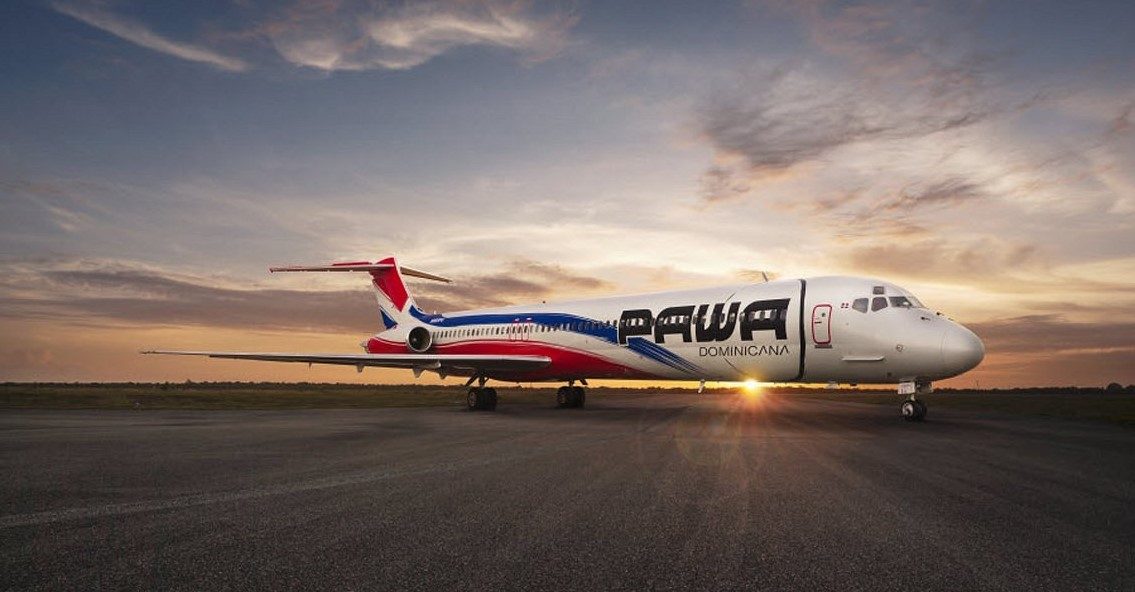
The Dominican Republic is a land of dreams—dreams as big as our mountains and as deep as our oceans. We are a people who know how to celebrate life, how to laugh through hardship, and how to build something out of nothing. But time and time again, we see our biggest dreams—like PAWA Dominicana—fall from the sky, not because we lack talent or passion, but because of a system that has failed us over and over again.
Let’s talk about PAWA. When it launched, it was more than an airline. It was a symbol of national pride, of what Dominicans could achieve if we dared to dream big. Finally, we had a carrier that flew our flag across the Caribbean skies—a homegrown airline, created by Dominicans, for Dominicans. The planes were painted with the blue, red, and white. The crew spoke our language, served our food, and represented our culture.
But behind the smiles and announcements at boarding gates, there was something deeper—an old, familiar story of mismanagement, unpaid debts, and a lack of accountability that slowly rotted the core. By 2018, PAWA collapsed. Planes grounded. Dreams scattered. And who suffered? The workers, the families, the small businesses relying on those flights, and the passengers stranded with nowhere to go.
Why did it happen? Let’s be real—it wasn’t because Dominicans are lazy or don’t know how to run a business. It wasn’t because we don’t have skilled pilots, engineers, or service staff. It wasn’t because we lacked customers—people wanted to fly PAWA.
It failed because leadership failed. It failed because corruption is treated like a bad habit instead of a national emergency. It failed because those in power too often think of today’s profit instead of tomorrow’s legacy. It failed because transparency is a slogan, not a practice. It failed because in this country, too many powerful people put their own pockets before the public good.
And this is not just about PAWA. It’s the same story in our energy sector, where blackouts still happen despite millions spent. It’s the same story in education, where schools lack resources but politicians drive luxury cars. It’s the same story in healthcare, in agriculture, in infrastructure—where contracts are awarded to friends, not the most capable, and where the needs of the people are treated like an afterthought.
So what do we do?
We have to change the culture. We have to break the cycle.
First, we must build a culture of accountability. Every cent spent from public funds should be traceable. Every project should have a timeline, a budget, and public oversight. If someone steals, they must face consequences. Not later. Not maybe. Ahora mismo. Because corruption isn’t a minor inconvenience—it’s a crime against the people, and it robs every child, every family, every entrepreneur of a future.
Second, we need to empower honest, competent leadership. We need leaders who care more about the country than about their own fame or fortune. Leaders who listen. Who serve. Who know that holding office is not about power, but about responsibility. Who understand that the Dominican Republic’s potential is limitless—if only we stop letting the same old hands hold us down.
Third, we must create reliable, long-term businesses that actually serve the country. This means investing in industries that build stability—like agriculture, manufacturing, tourism, and technology. It means supporting entrepreneurs, especially the young and the marginalized, so they can innovate without being crushed by red tape and corruption. It means making it easy to do honest business in the DR, so we don’t have to rely on fragile, unsustainable ventures like PAWA that collapse under the weight of greed and mismanagement.
It means building for the long haul, not just for a quick buck. Imagine if PAWA had been run like a true national carrier—with transparency, strong leadership, and a vision for the future. Imagine if we had used that as a springboard to grow Dominican aviation, create jobs, connect the islands, and bring more tourism, trade, and investment to our shores. That dream didn’t have to die. It was killed—by the very system we need to change.
This is our moment, Dominican Republic.
If we want a strong country, we must have strong businesses. If we want strong businesses, we must have honest leadership. And if we want honest leadership, we must demand it—every day, in every election, in every town hall, in every conversation. We must stop accepting “that’s just the way it is.” No. That’s the way it was. It’s time to write a new chapter.
PAWA’s story doesn’t have to be the last chapter. It can be a lesson. A reminder. A call to action.
Let’s build a Dominican Republic where dreams take flight—and stay in the air.
Let’s build a Dominican Republic where no child has to wonder if their country will ever take care of them.
Let’s build a Dominican Republic where our future is not sold to the highest bidder, but protected for the next generation.
The future is ours to build. The question is: Will we rise to the challenge?