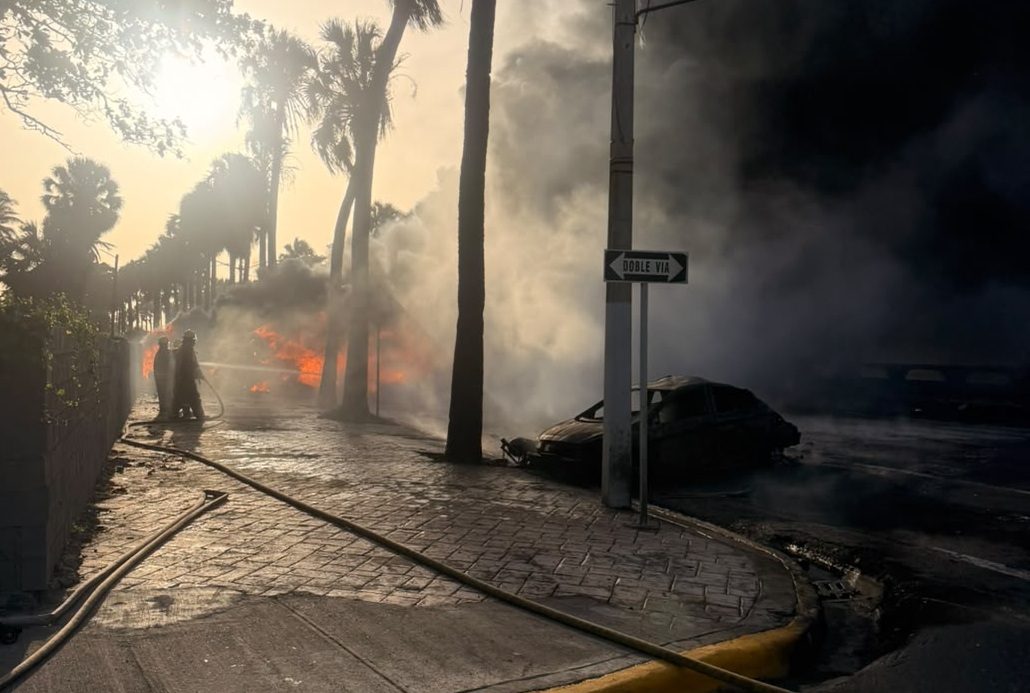
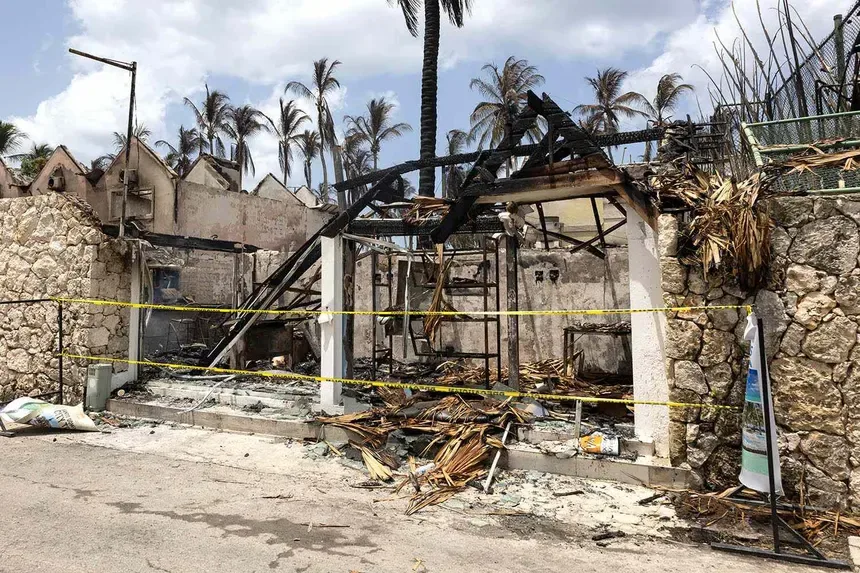
June 19th happened. One woman died. Nine were injured. Nearly 1,700 guests evacuated into the ocean and the beach because a fire moved through the Viva Wyndham Dominicus Beach resort in Bayahibe faster than anyone could control it. That's the record. That's what DR2028 documented in the first post.
But the harder question isn't what happened on June 19th. It's why what happened on June 19th was possible at all.
The Dominican Republic's Emergency Operations Center released their preliminary investigation findings days after the fire. The conclusion was clear and specific: the blaze spread with alarming speed because a significant portion of the Viva Dominicus Beach resort's roof was constructed from thatch, made of dried palm leaves and cane. This wasn't speculation. This wasn't a theory. This was the official finding from the government body tasked with investigating the incident. Strong coastal winds combined with highly combustible natural roofing materials created conditions where fire moved between structures faster than firefighters could contain it. Five hours. Fifteen firefighting units from multiple municipalities. And still the flames consumed approximately 700 rooms before they brought it under control.
The investigation answered one question: why did the fire spread so fast?
But it exposed a much larger one: why was a major luxury resort in 2026 operating with known combustible roofing materials on structures housing nearly 1,700 guests?
This isn't a story about the fire itself. This is a story about the system that allowed the fire to happen the way it did.
The Oldest Hotel Using The Most Combustible Materials
Viva Wyndham Dominicus Beach opened in 1987 as Club Dominicus. That's the beginning of the story, but here's what matters: it was the first all-inclusive resort in what is now Viva Resorts by Wyndham's Caribbean portfolio. Nearly four decades of continuous operation. Hundreds of thousands of guests. Multiple renovations and updates over the years. The property became iconic in the Dominican tourism landscape, especially among European and Argentine visitors. It was one of the first resorts to establish the Bayahibe beach corridor as a major destination.
According to reporting from El Inmobiliario, a major Dominican real estate and construction publication, Viva Dominicus Beach was the first and oldest hotel in the Dominican Republic still using traditional palm thatch roofing on guest-facing structures. Not the newest. Not some budget property. The oldest major resort in the area, operating continuously for nearly four decades, deliberately maintained cane roofing on significant portions of its complex.
Here's the critical detail that establishes this was a choice, not an accident: in December 2020, after a temporary closure due to the pandemic, the Viva Dominicus Beach underwent a complete renovation. According to the company's own official communications, this renovation included new guest rooms, renovated lobby, updated swimming pools, renovated restaurants and bars, and modernized facilities across the property. This wasn't a minor update. This was a major capital investment in bringing the entire resort into the modern era.
And the company kept the thatch roofing.
El Inmobiliario documented this explicitly: "Thirty-nine years after its opening, the complex retains as a visual hallmark the cane roofs on part of its structures." The verb matters. Retains. Not inherited. Retained. A deliberate choice made during a major renovation to keep the combustible materials in place.
According to reporting from Dominican television news coverage during the immediate aftermath, Viva Dominicus Beach was the first and oldest hotel in the Dominican Republic still using traditional palm thatch roofing. This wasn't a surprise discovery made during the fire investigation. This was a known characteristic of the property. If you worked in Dominican tourism, if you were a building inspector, if you worked for MITUR (Ministry of Tourism), if you worked for the local municipality in Bayahibe or La Romana, if you worked in fire prevention or emergency management, you knew this hotel had thatch roofing. It was distinctive. It was visible. It was part of how the resort marketed itself, as authentic Caribbean tropical architecture.
And they had the chance to change it in 2020. They didn't.
Which means the question isn't whether thatch roofing was a surprise hazard that nobody saw coming. The question is why a known fire hazard was permitted to continue operating at full capacity with nearly 1,700 guests inside it, even after a major renovation that was the perfect opportunity to eliminate the hazard.
The 2020 Decision: When The Opportunity To Change Existed And Didn't Happen
This is where accountability becomes specific and undeniable.
In 2020, Viva Resorts by Wyndham had to close Viva Dominicus Beach due to the pandemic. During that closure, they made a strategic decision. They would conduct a complete renovation of the property. New rooms. Renovated lobby. Updated pools. Modernized restaurants and bars. Major capital investment. The company issued official statements about the renovation, positioning it as a moment to bring the property into the modern era while maintaining its character.
During that renovation, someone had to look at the thatch roofing. Someone had to walk the property and see the cane structures. Someone had to make a decision: is this a fire risk we address now, during the renovation when we're already making major investments? Or is this a visual trademark worth keeping despite the known fire hazard?
The company chose to keep it.
That's not speculation. That's documented. El Inmobiliario, reporting on the fire in the immediate aftermath, noted that the property "retains as a visual hallmark the cane roofs on part of its structures." Retains means a choice. It was retained during the 2020 renovation. It was retained in 2021, 2022, 2023, 2024, 2025. It was retained until June 19, 2026, when fire spread through it faster than firefighters could contain it.
This reveals something crucial about how the system works. When a known fire hazard exists and someone has the opportunity and the capital to fix it, the question becomes: what's the economic incentive to fix it versus the economic incentive to leave it alone?
If you're a hotel operator, replacing thatch roofing with concrete during a major renovation costs money. It disrupts the visual aesthetic that guests pay for. It changes the character of the property in ways that might affect bookings or brand positioning. The financial incentive is to avoid the cost. The fire risk is theoretical. Nobody has died yet. The hurricane hasn't happened yet. The fire hasn't started yet. So the economic calculus is to retain the visual trademark and accept the theoretical risk.
That calculus is permitted to stand because the system doesn't force it to change. No regulation mandate. No insurance requirement. No government inspector saying you can't operate with thatch roofing or you have to replace it by a specific date. The system allows the economic choice to override the safety choice.
Until someone dies. Then the system reacts. New fire codes. Concrete roofing mandate. But the reaction comes after, not before.
The Physics Of Fire In Combustible Materials
Thatch roofing burns differently than concrete or metal. This isn't new information. Fire safety experts have documented the dangers of thatch roofing for decades. Once thatch ignites, it doesn't smolder slowly. It accelerates. The dried palm leaves and cane are highly flammable. They have low flash points. They burn hot and fast. In windy conditions, fire jumps from one thatch-roofed structure to the next. Embers travel. The roofing material acts like kindling, not like protection.
The Emergency Operations Center's statement about why the fire spread said this explicitly: strong winds and highly combustible roofing materials allowed the blaze to spread with alarming speed. They weren't theorizing. They were describing what happened. The winds were strong that day. But thatch roofing was the constant. Thatch roofing was the choice made years ago, the choice that remained, the choice that meant when fire started, it moved like it was designed to move through dry kindling.
A concrete roof doesn't burn. Fire can occur inside a concrete structure, but the roof itself doesn't become fuel for the fire. A metal roof doesn't burn. It conducts heat but it doesn't ignite. Thatch roofing doesn't just burn. It accelerates the burn. It spreads the fire.
This isn't debatable. It's physics. It's material science. It's why fire codes across the developed world restrict thatch roofing on public structures and especially on occupied commercial buildings. It's why when thatch roofing is permitted at all, it comes with extensive fire suppression requirements and strict limitations on occupancy.
And yet Viva Dominicus was operating at 84 percent occupancy with nearly 1,700 guests when the fire started.
Who Knew And When Did They Know It
This is where accountability becomes concrete.
Building codes exist. Inspection systems exist. Government oversight exists. Tourism authority oversight exists. Fire prevention officials exist. Municipal building departments exist. These aren't fictional. They're real institutions in the Dominican Republic tasked with ensuring that buildings, especially large commercial buildings that house hundreds or thousands of people, meet minimum safety standards.
The question isn't whether these systems exist. The question is why they allowed a major resort to continue operating with a known fire hazard.
When Viva Dominicus was renovated or expanded over the decades, someone issued a building permit. Someone reviewed architectural plans. Someone certified that the construction met building code requirements. When guests were allowed to stay at the property, someone inspected it. Someone certified it as safe. When the resort operated at high occupancy, someone evaluated whether it met fire safety standards. When the fire department trained for emergencies in Bayahibe, they knew what buildings they were training for. They knew Viva Dominicus had thatch roofing.
And yet the system allowed it to continue.
This doesn't mean individual inspectors or officials were corrupt or negligent. It means the system itself wasn't designed to enforce restrictions on combustible materials in occupied commercial structures. Or the system existed but wasn't enforced. Or enforcement was inconsistent. Or the rules weren't clear enough. Or there was political pressure to allow the property to operate as is because tourism revenue mattered more than a fire risk that hadn't materialized yet.
One person had to die before anyone asked whether the risk was real.
MITUR (Ministry of Tourism) oversees tourism properties and their compliance with tourism-specific standards. They work with local municipalities who oversee building permits and building code compliance. The Fire Department has authority over fire safety. Multiple systems had touchpoints with this property over nearly four decades. Multiple systems knew it had thatch roofing. Multiple systems allowed it to continue operating.
The question worth asking isn't whether individuals failed. The question worth asking is whether the system was designed to fail in exactly this way.
The Cost Of Changing What Was Already Built
Replacing thatch roofing on an operating resort with concrete isn't a cheap renovation. You're talking about significant capital investment. Downtime during construction. Temporary closures of sections of the property. Disruption to revenue during high season. For a resort operating at 84 percent occupancy, that's real money lost.
But that's exactly why fire codes exist. Fire codes mandate expensive safety improvements specifically because business owners won't make them voluntarily if the risk hasn't materialized yet. If the economic incentive is to keep operating as you are, and the fire safety risk is hypothetical, the rational business decision is to keep operating as you are. That's true for every business. That's why codes exist, to force the safety choice when the business choice is to defer the cost.
And yet Viva Dominicus continued operating with thatch roofing into 2026. Nearly four decades of operation. Forty years of avoiding the capital investment to replace known combustible materials.
Maybe the property owner didn't see it as a fire risk. Maybe they believed their fire suppression systems were adequate. Maybe they believed the thatch roofing was an asset because guests appreciated the authentic Caribbean aesthetic. Maybe they calculated that a fire was statistically unlikely and the cost of prevention exceeded the expected cost of an incident. Maybe they simply never prioritized it.
The point is that the business decision to avoid that capital investment was permitted to stand. The system allowed it.
Now one woman is dead. Nine are injured. Seven hundred rooms are destroyed. The resort is closed indefinitely. And the government is announcing new fire codes that say no more thatch roofing on hotels going forward.
Those codes should have existed forty years ago.
The Gap Between What Codes Say And What Happens
Dominican building codes existed. They were written. They were circulated. They specified construction requirements. The question is whether those codes actually restricted thatch roofing on occupied commercial structures, and if they did, why Viva Dominicus operated in violation of them for forty years without enforcement action.
If the codes didn't restrict thatch roofing, then the question is why not. What was the reasoning? In a tropical country where thatch roofing is part of the aesthetic and cultural heritage, were fire codes written to accommodate that preference at the expense of safety? Were fire codes written by people who didn't understand the hazard? Were fire codes written but never enforced?
The Dominican Republic is preparing to implement a new comprehensive Building Code starting April 10, 2027. The Ministry of Housing, Habitat and Buildings (MIVHED) spent years developing this. It's supposed to establish rigorous technical standards for all construction. It's supposed to reduce discretion in approval processes. It's supposed to strengthen inspection mechanisms. It's supposed to prioritize safety.
Those are the things the new code is supposed to do starting in April 2027.
Viva Dominicus was operating with thatch roofing in June 2026. Months before the new code took effect.
And according to your observation of Dominican television coverage, the government has announced that going forward, hotels must use concrete roofing. No more cane, no more thatch, concrete only. That announcement came after June 19th. After one woman died.
The Investigation That Happened After Someone Died
The Emergency Operations Center conducted an investigation. They determined that thatch roofing was the reason the fire spread so fast. That investigation was necessary and thorough. It documented what happened and why. It's part of the accountability record.
But the investigation happened after the fire. The government didn't investigate whether the property was safe before the fire. They didn't conduct a systematic review of all hotels in La Altagracia using combustible roofing materials. They didn't mandate upgrades or closures or occupancy restrictions based on a preemptive fire safety assessment. The investigation happened in response to a disaster, not in prevention of one.
This is the pattern that DR2028 is documenting. Institutions respond to catastrophes instead of preventing them. The Jet Set nightclub collapse in April 2025 killed 236 people before anyone asked serious questions about how that roof was permitted. The Viva Dominicus fire killed one woman before anyone asked serious questions about why thatch roofing was permitted on a major occupied resort. The pattern is reactive, not proactive.
That's not just inefficient. That's a failure of governance infrastructure. And that's what this accountability platform exists to document.
Who Bears Responsibility And What Does That Mean
This isn't about blaming individual people. The general manager of Viva Dominicus didn't wake up and decide to create a fire hazard. The inspectors who approved the property weren't necessarily corrupt. The government officials who permitted operations weren't trying to hurt people.
But responsibility is still real. And it exists at multiple levels.
The property owner or operator had responsibility to maintain safe conditions. The fact that it was legal to operate with thatch roofing doesn't mean it was right. If you know a material is combustible and you're housing 1,700 people in structures built with that material, you bear responsibility if fire occurs. That responsibility extends to evaluating whether your fire suppression systems, evacuation procedures, and structural designs are adequate for the actual risk you're creating.
The government agencies responsible for building code enforcement had responsibility to inspect the property and ensure it met minimum safety standards. If codes allowed thatch roofing, those agencies had responsibility to establish fire suppression requirements commensurate with the risk. If codes didn't allow thatch roofing, those agencies had responsibility to enforce that requirement. They didn't do that.
MITUR had responsibility to ensure tourism properties met safety standards. They allowed the property to operate.
The local municipality had responsibility to enforce building codes. They allowed the property to operate.
The Fire Department had responsibility to ensure properties in their jurisdiction could be safely evacuated in case of emergency. They allowed the property to operate at high occupancy.
None of these institutions forced the capital investment that would have prevented this. All of them permitted the risk to continue.
One woman died as a result. Nine people were injured. Nearly 1,700 people had to evacuate by running into the ocean. Seven hundred rooms were destroyed. A major resort is closed. Hundreds of workers are displaced.
That's what responsibility looks like when it's deferred until after the disaster.
What Changed After June 19th And What Didn't
The government announced new fire codes. Concrete roofing mandate for hotels. No more thatch, no more cane. That's concrete change. That's a rule that didn't exist before but exists now.
But the harder questions are the ones about enforcement and reach.
Does this new rule apply only to new construction or does it require existing properties to retrofit? If it's only new construction, then every hotel currently operating with thatch roofing has years before they're forced to comply. That's not urgency. That's permission to defer.
Is there a timeline for compliance? When do existing properties have to upgrade? Thirty days? Six months? Two years? The timeline determines whether this is a genuine safety mandate or a symbolic gesture.
Who inspects compliance? Who enforces the rule if a property ignores it? Are there penalties? Are the penalties high enough to actually force compliance or low enough that a property owner can calculate it's cheaper to pay fines than upgrade the roof?
Has MITUR issued guidance to all tourism properties about the new requirements? Have they conducted audits of existing properties to identify which ones need to upgrade? Have they established a timeline and inspection protocol? Or did they issue an announcement and then wait to see what happens?
Has the government mandated that properties currently operating with thatch roofing implement enhanced fire suppression in the interim? Sprinkler systems throughout? Fire walls between structures? Reduced occupancy limits until roofs are replaced? Or are those properties still operating at full capacity while waiting to see if and when they have to comply?
These aren't rhetorical questions. These are the actual accountability mechanisms that determine whether a new rule changes anything or whether it just looks like the government is responding when in reality nothing materially changes.
Viva Dominicus is closed, so it doesn't matter for that property right now. But there are other hotels in Bayahibe. There are other resorts throughout the Dominican Republic. The question is whether they're being required to change or whether they're being permitted to continue.
The Accountability Gap
This is the core of what this post is documenting. The gap between the moment a risk is known and the moment it's finally treated as urgent enough to act on. That gap is where people die.
The investigation found that thatch roofing was the problem. But the investigation happened after one woman was dead. The investigation confirmed what the government should have known for forty years. The government issued new fire codes after people were evacuated and hospitalized and one person was dead.
That's the gap.
DR2028 exists to document these gaps. To ask: if the risk was known, why did it take a disaster to act on it? If the system had the authority to enforce safety standards, why did the system allow the risk to persist? If fire codes exist, why were they not enforced? If fire codes didn't exist or were inadequate, why weren't they updated before people died?
These aren't accusations against individuals. These are questions about governance infrastructure. About whether the systems designed to protect people actually work until something forces them to work.
Francesca Valentina was 46 years old. She was from Caserta, Italy. She was staying at what was supposed to be a safe resort. She died from smoke inhalation because a fire spread through thatch roofing materials that a major resort company retained during a complete 2020 renovation despite knowing that thatch is a known fire hazard.
That choice was made. In 2020, during a major capital investment renovation, someone in the company decided to keep the combustible materials. That decision was permitted to stand. No government agency forced the change. No fire code mandate existed. No inspection system said you can't do this. The economic choice to avoid the cost of upgrading roofing materials was permitted to override the fire safety concern.
Nine other people were injured.
Nearly 1,700 people had to run for their lives.
And the government response was to announce, after the fact, that they're changing the fire code.
That's accountability infrastructure failing. Not at the moment of the fire. But years earlier, when the opportunity existed to prevent it and the choice was made not to.
Francesca Valentina paid the price for that choice. That's the story DR2028 documents. Not just what happened on June 19th. But what choices were made and permitted to persist in the months and years before, and what systemic failures allowed those choices to stand unchallenged until people died.
That's the gap. That's what accountability infrastructure needs to close.
What This Means For The Broader Tourism Infrastructure
The Dominican Republic welcomed more than 10 million visitors in 2025. Tourism is a pillar of the economy. It represents significant employment, foreign exchange, tax revenue, and economic development, especially in regions like La Altagracia where Bayahibe is located.
That matters. Economic development matters. Tourism is important.
But tourism infrastructure doesn't get to exist outside of safety standards. Hotels get to operate because they're permitted to operate. That permission is contingent on meeting minimum safety requirements. The moment you stop enforcing those requirements, you're not protecting the tourism industry. You're exposing it to catastrophic liability. You're exposing employees to dangerous working conditions. You're exposing tourists to preventable risks.
When Viva Dominicus closed indefinitely after the fire, the tourism sector lost capacity. Employees lost jobs temporarily. Bayahibe lost occupancy. But none of that compares to the cost of operating unsafely. The cost of one fatality. The cost of injuries. The cost of damaged reputation. The cost of international scrutiny on safety standards.
A government that enforces fire codes is actually protecting the tourism industry. A government that defers fire code enforcement is gambling with the industry's legitimacy and long-term viability.
The new fire codes requiring concrete roofing are the right move. The question is whether they're implemented with teeth or issued as symbolic gestures.
The Pattern And What It Means For Future Incidents
This isn't the first time this pattern has shown up in Dominican infrastructure. The Jet Set nightclub collapse in April 2025 killed 236 people. The investigation found structural failure in the roof design. The government announced new building codes after. Buildings collapsed before the codes were updated to prevent them. The pattern is reactive.
That pattern persists because there's no accountability infrastructure that forces proactive safety. There's no independent monitoring system documenting which properties are operating outside of safety standards. There's no public record of inspection results that allows tourists or employees to know whether a building is safe. There's no enforcement system with real teeth that makes non-compliance more expensive than compliance.
DR2028 is built to create that infrastructure. To document what's happening. To ask the accountability questions. To maintain a public record of how systems work or don't work.
The fact that a major resort operated for forty years with combustible roofing materials on structures housing nearly 1,700 guests and it took one woman dying for the government to announce new fire codes that should have existed decades ago, that's the story. That's what accountability looks like when it's completely absent until a disaster forces it.
What Happens Next
The government is implementing new fire codes. That's the immediate response.
But the harder accountability work is what follows. Inspections of existing properties. Enforcement of new requirements. Timeline for compliance. Monitoring to ensure hotels are actually upgrading their infrastructure and not just filing forms and ignoring the mandate.
That's the work that rarely happens. That's the work where the system tends to default back to reactive rather than proactive.
Francesca Valentina is still dead. Nine people are still recovering from injuries. Seven hundred rooms are still destroyed. Nearly 1,700 people still experienced a disaster that should have been prevented.
A new fire code doesn't undo that. A new code says: it won't happen this exact way again. It doesn't say: we had the authority and capacity to prevent it and we did. It says: we waited until someone died before we took it seriously.
That gap between what could have been prevented and what actually happened, that's what DR2028 documents. That's the accountability infrastructure the Dominican Republic needs. Not just after disasters, but before them. Not just new rules, but enforcement of existing rules. Not just investigation of what went wrong, but audits of what's about to go wrong.
Viva Dominicus had thatch roofing because someone decided to keep it. The government allowed that decision to stand. Fire moved through thatch roofing faster than it would have through any other material. Someone died.
That's the second blog post. That's the harder story. That's what accountability looks like when it arrives too late.