The Resort Gold Rush is Killing the Dominican Republic from the Inside Out
June 2026
Every week, another shovel hits the ground in Punta Cana. Another hillside gets flattened. Another forest gets cleared. Another golf course gets built. And every single time, the same story gets repeated like a broken record: jobs, investment, economic growth. But nobody talks about what's actually happening to the people living between those resorts.
The Dominican Republic is drowning in a contradiction that nobody in power seems willing to acknowledge. We are building the most luxurious hotel infrastructure in the Caribbean while our own citizens cannot reliably drink water from their taps, cannot breathe clean air in San Cristóbal, cannot drive ten minutes without sitting in traffic that makes no sense, and cannot flush their toilets in neighborhoods just miles away from five-star resorts with infinity pools.
This is not sustainable. This is not progress. This is extraction dressed up as development.
The Numbers That Nobody Wants to Talk About
Let's start with what actually matters. The Dominican Republic approved hundreds of new hotel rooms and resort expansions over the last five years while critical infrastructure remained frozen in place. We are talking about tens of billions of pesos flowing into hospitality while sewage systems built in the 1980s are being asked to handle three times their capacity. Water treatment plants that were never adequate are now completely overwhelmed. Power generation is held together with electrical tape and prayers. And traffic? Traffic has become a form of national punishment.
Punta Cana, where most of these mega resorts cluster, is running on infrastructure that was designed for 25,000 people. There are now nearly 800,000+ people living there, plus hundreds of thousands of tourists rotating through each year. The road system cannot handle it. The water system cannot handle it. The sewage system is failing. But the permits keep getting issued. The cranes keep swinging. The trees keep falling.
This is not an accident. This is a choice.
Follow the Money, Ignore the Citizens
Here is what gets prioritized in the Dominican Republic: a foreign developer with a glossy presentation and a fat envelope of promises can walk into a government office and get permits for a 500-room beachfront resort faster than a Dominican family can get their neighborhood sewage line repaired. That tells you everything about how this system works.
A mega resort brings foreign investment. It brings tax revenue that probably ends up in the wrong pockets. It brings jobs, yes, but mostly low-wage service jobs that do not build wealth for Dominican families. But it also brings a long list of things that do not get talked about: water demand that strains aquifers, waste that needs to go somewhere, traffic that clogs already broken roads, and a pressure on local resources that ordinary Dominicans end up paying for.
Meanwhile, the Ministry of Public Works has a budget that looks small compared to what gets spent on resort infrastructure. Water companies are underfunded and understaffed. Sewage treatment is not a sexy project, so it does not get the same enthusiasm from investors or government officials. Fixing the electrical grid does not come with ribbon-cutting ceremonies or international media coverage. Building a sustainable transportation system is complicated and does not promise quick returns.
So instead, we get what we have now. We get hotels that have backup generators while neighborhoods go dark. We get resorts with desalination plants while towns run dry. We get golf courses that are watered every day while farmers struggle with droughts. We get infrastructure that serves tourists better than it serves citizens.
This is not development. This is abandonment with a marketing budget.
What We Have Lost
The Pine Forests of the DR are disappearing. Not all at once in some dramatic visible way, but piece by piece, permit by permit, as land gets cleared for resort expansion or golf courses or real estate developments that cater to foreign money. These forests are not just trees. They regulate water. They hold soil. They keep the climate stable. Once they are gone, they do not come back in a decade or two. We are talking about ecological damage that will take generations to repair, if repair is even possible.
The mangroves are another story. Mangroves are the lungs of coastal ecosystems. They filter water, they protect shorelines, they are nurseries for fish. And they are being destroyed to make room for beach clubs and waterfront developments. In fifty years, when sea levels have risen and hurricanes are stronger, people will look back and ask why we let this happen. The answer will be the same as it is today: short-term money.
Groundwater is being depleted faster than it is being replenished. The aquifers that supply drinking water to millions of Dominicans are being pumped dry by resort properties and golf courses and construction projects. Some of these aquifers took thousands of years to fill. They are being emptied in decades. And there is no real plan for what happens when they run dry.
Coastal ecosystems are being degraded by overdevelopment and poor waste management. Coral reefs that used to be world-class are now bleached and dying. Not just from climate change, though that is part of it, but from pollution and runoff and development pressure that never lets up. The ocean is changing in front of us, and we are still building more resorts.
The Infrastructure That Actually Matters
Let's talk about what should be getting priority instead of another mega resort.
The water system in the Dominican Republic is a disaster. Leakage rates in major cities are so high that nearly half the water pumped into the system never reaches anyone's home. It just seeps out through old pipes. In a country where water security is a real issue, this is inexcusable. Fixing this would require billions of pesos and years of work, but it would actually improve the lives of Dominican citizens. It would increase water security. It would reduce dependence on expensive emergency water imports. But it does not get approved the way a resort gets approved.
Sewage treatment is another area where things are broken and getting worse. Most wastewater in the DR is treated at best partially, and in many areas not at all. Raw sewage flows into rivers and coastal waters. This is not just an environmental issue. It is a public health crisis. It causes disease. It makes water unsafe. And it compounds the water problem because contaminated water has to be treated more aggressively or replaced entirely. A major investment in modern sewage infrastructure would pay dividends for decades. But the government is not pushing for it the way it pushes for resort permits.
Power generation is held together by outdated infrastructure and expensive diesel imports. The Dominican Republic does not have enough generating capacity to meet demand reliably, which is why rolling blackouts happen. Solar potential is massive. Wind potential is excellent. But investment in renewable infrastructure gets a fraction of the attention that resort development gets. This is not logical. This is a choice about priorities.
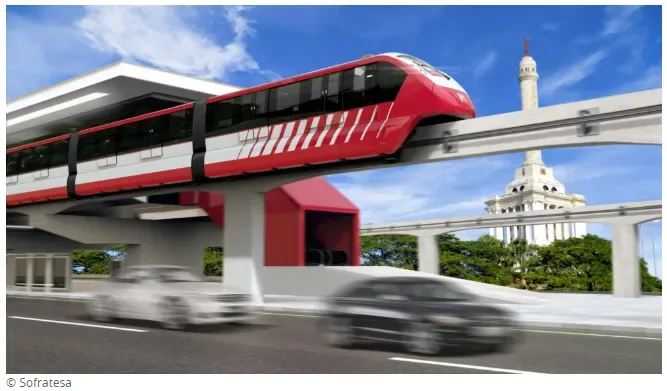
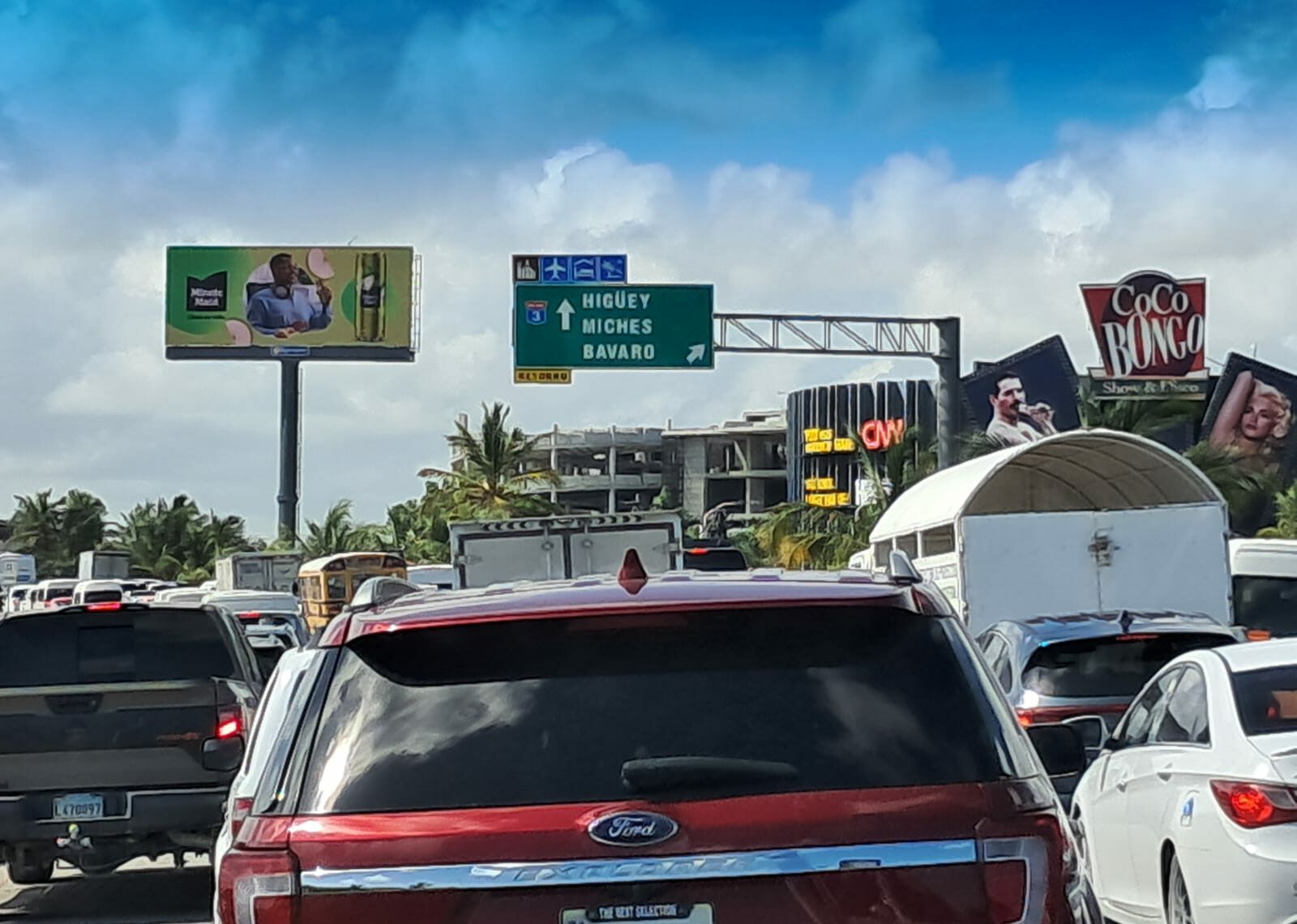
Transportation is a mess. Traffic in Santo Domingo, Santiago, and the major tourist areas has become a paralysis. The roads cannot handle the volume. Public transportation is inadequate. There is no metro system in Santo Domingo despite decades of planning. There are no real alternatives to driving. So everyone drives, which makes the traffic worse, which makes commerce slower, which makes the quality of life worse. Investing seriously in public transportation and road infrastructure would benefit every single person in the country. But it does not move politicians the way cutting a ribbon on a new resort does.
Waste management is another crisis waiting to happen. The DR produces massive amounts of garbage, and disposal is either landfills that are overflowing or open dumping that contaminates groundwater. Recycling exists mostly in name only. And with more tourists and more construction, waste production is accelerating. A real waste management system would require investment and coordination across multiple government agencies. It is boring. It does not make headlines. So it does not happen.
Even the Builders of Tourism Say This is Broken
Here is what makes this argument undeniable. Frank Rainieri, the chairman of Grupo Puntacana and the man who literally built the tourism infrastructure that made Punta Cana what it is today, went public in April 2026 calling the growth "insostenible" (unsustainable). Not from an environmental activist position. Not from someone opposed to tourism. From a capitalist who made billions building resorts.
Rainieri was direct. He said the government lacked the courage to regulate development properly. He said growth must happen with limits and responsibility. And most importantly, he identified the core problem that your government refuses to acknowledge: projects are being approved in areas that lack basic services, without treatment plants, without proper access roads.
His exact words cut to the heart of the contradiction: "¿Los tapones, por qué son? Porque tenemos calles estrechas, donde se están construyendo mastodontes..., y entonces después venden y se van" (Why the traffic? Because we have narrow streets where massive developments are being built, and then they sell and leave).
Rainieri pointed out that it is the residents of Punta Cana who suffer most. Not the developers. Not the government officials taking bribes. The actual people living there. The families trying to get to work through traffic that makes no sense. The neighborhoods without clean water. The communities dealing with the garbage that the resorts generate.
You can read his full statement here: https://www.diariolibre.com/economia/turismo/2026/04/22/rainieri-critica-crecimiento-inmobiliario-sin-control-en-punta-cana/3510963
Also there is one hour and 55 minutes video full interview with Rainieri and it never seen before, for first time he revealed all of his secrets about Punta Cana, to see the video here:
The Vision That Rainieri Built, and the Vision the Government Abandoned
To understand his anger, you have to understand what Rainieri actually built when he developed Punta Cana starting in 1970. He did not just throw up resorts and walk away. He built a complete community.
In 1971, he built the first 10 beach cottages. In 1972, before the resorts were even profitable, he built the first elementary school. In 1988, he created the Puntacana Ecological Foundation and donated 1,500 acres of land for an ecological park and reserve. In 2000, he founded a bilingual private school to serve the region. In 2004, he built a public polytechnic school. In 2005, he established a rural clinic. In 2006, he built a police station for the community of Verón. In 2007, he launched a zero waste integrated solid waste management system for the entire area.
He did not stop there. He created beekeeping projects. Worm composting programs. Marine protected area designations. He launched a pediatric center that provides primary health care to more than 15,000 disadvantaged children from local communities. He created coral nurseries and fish nurseries. He organized medical missions. He built craft workshops and housing projects.
This is a 50-year commitment to building a place, not just extracting from it. Rainieri understood that tourism only works if the destination is actually livable. It only works if there are schools for workers' children. It only works if there are clinics. It only works if waste is managed. It only works if the community itself has dignity and opportunity.
His vision was that Punta Cana would be both a world-class vacation destination and a place where people actually wanted to live and raise families. Not a place where workers commute two hours through traffic to serve tourists. Not a place where the forest disappears and the aquifers run dry. Not a place where the only options for Dominican people are low-wage service jobs in resorts that do not care about the community.
And he hoped that Punta Cana would become a blueprint. A model that other regions in the Dominican Republic could copy. Not just Puerto Plata or Cabarete, but inland towns, rural areas, anywhere that wanted to build tourism infrastructure the right way. A template for how you develop without destroying. How you bring jobs without abandoning responsibility. How you create prosperity that actually reaches the people who live there.
That was the dream. That was the legacy he wanted to leave.
He is 80 years old now. He has spent fifty years on this. And here is the thing that nobody talks about: Rainieri designed Punta Cana village for 25,000 residents. That was the sustainable capacity. That was the number he built infrastructure for. Schools for 25,000. Clinics for 25,000. Water systems for 25,000. Sewage systems for 25,000. Roads for 25,000. Waste management for 25,000. Everything was proportional to what a community of that size actually needs.
There are now over 800,000 people in the Punta Cana area.
That is more than 30 times the capacity he designed for. Every single system is overwhelmed. The schools cannot accommodate that many people. The clinics are swamped. The water system is failing. The sewage system is failing. The roads are paralyzed. The waste management is breaking down. Nothing was built for 800,000 people because nobody was supposed to be building for 800,000 people.
And the government is still issuing permits. Still approving new resorts. Still allowing the population to grow. Rainieri said it directly: Punta Cana itself is not prepared for this overgrowth. It needs to be controlled. But the government does not do anything. They just keep issuing permits and pretending the infrastructure will somehow handle it.
That vision required coordination and cooperation. It required government support. It required investment in the systems that make a place livable. And for decades, Rainieri was willing to do much of that work himself because the government was not doing it.
When the new overpass near the airport was built, Rainieri paid for it. Not the government. Not with tax revenue. Rainieri. Because the infrastructure was needed and the government was not providing it. That overpass was supposed to be a government responsibility. Instead, a private developer had to build it just to keep traffic from completely paralyzing the region.
This is what people do not understand about the anger in Rainieri's statement. He is not angry because he opposes development. He is angry because he invested in Punta Cana as a place to live and work, not just as a place to extract money. He built schools and clinics and ecological reserves. He created social programs and environmental initiatives. He paid for infrastructure that the government should have paid for. And he watched the government completely fail to do the same while approving every single resort permit that came through the door.
Rainieri said it directly: the government has not invested in Punta Cana for years. They have not built the infrastructure needed. They have not coordinated with the hotels that do most of the work. They have not managed anything. They have just approved permits and collected money while the infrastructure fell further and further behind.
Now new developers are coming in. Developers who have not invested a single peso in schools or clinics or ecological reserves. Developers who will build 500 rooms, extract profit for five years, and then sell to another developer who will do the same. They are not building communities. They are mining tourism revenue. And the government, apparently, is letting them do it.
Whether it is deliberate bribery or just administrative incompetence, the result is the same. Permits are being issued faster than the infrastructure can support. Rainieri's community is being buried under resorts built by people who do not care about it.
The Warning About Management and the Future
This is where Rainieri's statement becomes a genuine warning. He is not just complaining about traffic or poor planning. He is saying that Punta Cana needs new governance. It needs an overboard, a coordinating body that can actually approve or deny new projects based on whether the infrastructure exists to support them. It needs oversight that ensures that when new resorts are built, the highways are upgraded, the electrical systems are expanded, the sewage systems are upgraded to handle the demand.
Without that, Rainieri said something that should terrify anyone paying attention: Punta Cana might become the next Santo Domingo.
That is not hyperbole. That is a legitimate projection based on what happens when a place grows too fast with no management. Santo Domingo is paralyzed by traffic. The infrastructure is completely overwhelmed. The city functions despite itself, not because of good planning. The air is polluted. The water is problematic. The whole system is stretched to breaking point.
Rainieri is saying Punta Cana is on that path right now. If the current trajectory continues, if resorts keep getting built without regard for infrastructure capacity, if the government keeps doing nothing except issuing permits, then Punta Cana will become unlivable not just for tourists but for workers and residents. It will become a place where the infrastructure fails regularly. Where water is rationed. Where traffic makes commerce impossible. Where basic services collapse under the weight of demand.
And that would be the ultimate failure of what Rainieri tried to build. His entire vision was that you could do tourism development right. You could have growth and quality of life. You could have resorts and livable communities. You could have prosperity without destruction. But that vision requires management. It requires someone saying no to some permits. It requires someone insisting that infrastructure comes first.
The Dominican government has shown zero willingness to do that.
The Question That Nobody Wants to Answer
Here is the core question that every government official, every developer, every tourism ministry bureaucrat should have to answer directly: Why do we approve massive resort projects faster than we can fix the water system that serves our own people?
The answer is simple. It is because resorts come with money attached. A developer shows up with capital ready to invest. They create a business case. They follow procedures that have been streamlined for foreign investment. They have lawyers and consultants and they know how to navigate the system. And they leave money in accounts along the way.
Water infrastructure, on the other hand, is a public good. It is not profitable in the way that a resort is profitable. It does not generate foreign investment in the way that tourism does. It does not create opportunities for kickbacks or commissions the same way that development permits do. It is just necessary. It is just infrastructure. So it gets neglected.
This is a failure of governance. This is a failure of vision. This is a failure of putting long-term national health ahead of short-term personal wealth. And now even Frank Rainieri, a man who has profited more from this system than almost anyone, is saying it cannot continue like this.
What This Looks Like in Five Years
Project forward. Assume the current trend continues, which it will because nobody in power has any incentive to stop it. What does the Dominican Republic look like in 2031?
There will be more resorts. Probably another hundred thousand hotel rooms across the country. More beaches developed. More forests cleared. More golf courses. More gated communities for foreign wealth. The tourism numbers will look great. The government will point to revenue figures and employment statistics and declare victory.
But the water situation will be worse. Aquifers will be lower. Coastal areas will be dealing with saltwater intrusion into freshwater supplies. More neighborhoods will be rationing water or buying it from expensive private trucks. More crops will fail because irrigation water is not available. More business will relocate because reliable water supply cannot be guaranteed.
Traffic will be worse. The road system will be more paralyzed because nothing was done to increase capacity or create alternatives. Commutes will take longer. Productivity will suffer. Quality of life will decline for the millions of people who drive on those roads every day.
Waste will be piling up. Landfills will be full. Coastal areas will be dealing with pollution from inadequate waste management. The investment in solving this will finally happen, but it will happen in crisis mode at triple the cost, after damage has already been done.
Air quality will have deteriorated further. Diesel trucks sitting in traffic burn fuel all day. Industrial pollution in major cities is not controlled. Construction dust from all the resort development clouds the air. More children will have respiratory problems. More people will develop pollution-related illnesses. Public health costs will rise.
And the irony will be that tourists visiting the resorts will experience worse air, worse traffic, worse infrastructure quality because everyone else's quality of life has declined. Even the resorts will eventually suffer because their own supply chains and the surrounding ecosystem they depend on will be degraded.
This is not some doomsday prediction. This is just following the current trajectory to its logical conclusion.
The Conversation That Needs to Happen
The Dominican Republic needs a hard conversation with itself about what kind of country it wants to be. Is it a country that exists to serve tourism and foreign investment, with Dominican citizens as an afterthought? Or is it a country that uses tourism revenue strategically to build a better life for the people who actually live there?
These are not mutually exclusive. The DR can have tourism and have strong infrastructure. But it requires making different choices about permits and prioritization. It requires saying no to some resort projects so that water treatment plants can get funded. It requires making sewage infrastructure as important as hotel development. It requires investing in transportation systems that serve citizens first.
This requires political will. This requires officials who are willing to face down foreign investment pressure, who are willing to say that a new resort permit gets issued only after proof that the infrastructure can support it. This requires transparency about who is getting paid and how decisions are being made. This requires treating long-term national health as more important than short-term commission payments.
None of this is happening right now. The current system is working exactly as it is designed to work. Permits flow out. Trees fall. Water gets pumped. Money gets moved. And the infrastructure that actually matters to Dominican citizens gets starved of resources.
This can change, but it requires someone in power actually wanting it to change. And right now, there is no indication that is happening.
What We Know But Do Not Say Out Loud
Here is what everyone in the DR knows but what nobody says in official settings. The current development model is unsustainable. We cannot keep building resorts at this pace without collapsing the basic systems that keep a society functional. Water, sewage, power, transportation, waste management, air quality, ecological health. These things matter more than another beachfront hotel.
We are trading permanent damage for temporary wealth. We are selling the future to pay for today. And the people who benefit from this arrangement are not the same people who will suffer the consequences.
A family in a neighborhood without reliable water does not benefit from a new resort being built twenty kilometers away. A farmer watching his well run dry does not benefit from tourism revenue that never reaches his area. A person sitting in three hours of traffic does not benefit from economic growth statistics. A child breathing polluted air does not benefit from employment numbers.
But that family, that farmer, that person in traffic, that child, they will all benefit massively from a water system that works, from a sewage system that does not fail, from roads that are not paralyzed, from air that is safe to breathe. And these things are possible. They are not impossible. They just require choosing them over the next big resort project.
The Choice
The Dominican Republic stands at a crossroads. One path continues what is happening now: resort development accelerates, infrastructure is neglected, quality of life for ordinary citizens gradually declines while tourism metrics look good. The other path requires making different choices. It requires saying that a mega resort is approved only when the infrastructure to support it actually exists. It requires treating Dominican citizens as the priority, not as the background in the tourism postcard.
This is not about being anti-development or anti-tourism. The Caribbean economy depends on tourism. The DR needs the foreign exchange it generates. But it needs to be development that is proportional to actual infrastructure capacity, not development driven purely by investment opportunity.
The current system is broken because it optimizes for the wrong outcome. It optimizes for short-term foreign investment and personal enrichment, not for long-term national capacity and citizen wellbeing. Changing this requires someone in power actually choosing to change it.
That conversation needs to start now. Because in five years, when the water crisis is worse, when the traffic is worse, when the ecological damage is more visible, when the public health costs are higher, it will be too late to undo what is being decided today.
The question is not whether the DR can afford to invest in infrastructure first and approve development second. The question is whether the DR can afford not to.
The resorts will be built regardless. Someone will find a way to make money. But the Dominican people deserve a country where their own basic needs come before luxury hospitality for foreign tourists.
That is not a radical ask. That is just basic governance.